






Salesforce Data Replication

Sync Salesforce data — anytime, anywhere

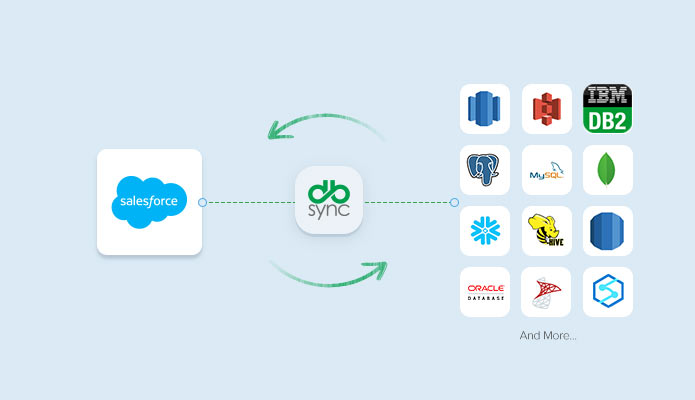
DBSync replicates Salesforce data to any SQL or NoSQL database, SQL Server, Oracle, PostgreSQL, MongoDB, Snowflake, Databricks and more with no code. Schema-aware CDC keeps standard and custom objects in sync in near real time for warehousing, analytics, and backup

Salesforce data replication

Salesforce replication made easy

Automate data replication from Salesforce in 5 simple steps with DBSync’s no-code replication platform.

Connector Specifications

Category:

CRM Application

Supported Target Connectors:

sql server
MySQL
postgreSQL
MongoDB
Snowflake
amazon s3
Amazon Redshift
databricks

Deplyment Modes:

Batch API; J2EE Web Server; Deployments to EXE, Zip, Docker, AWS Images

Similar Source Connectors:

Microsoft Dynamics 365
business-central
Warehouse data
Migrate data

Automate ELT​
Replicate data​
Democratize data​

Schema - aware replication

DBSync replication automatically maps and adapts to Salesforce’s dynamic schema for standard and custom objects, ensuring your data is ready for analytics, reporting, or integration—without extensive post-processing or restructuring.

Why leading data teams choose DBSync

No-code Automation Platform

Schedule data movement across on-prem and cloud systems with auto schema modifications and zero coding.

Enterprise-Grade Security & Compliance

Top-grade security standards with SOC 2, HIPAA, and GDPR compliance.

Simple & Transparent Pricing

Always know what you're paying with fixed, simple pricing plans.

White-glove Onboarding & Support

Tailored onboarding and support to help get started and stay running

Resources to help you at every step

Interactive Demo

Experience our product firsthand with an interactive walkthrough demo that showcases the key features and benefits of our Replication solutions.

Documentation

Access our comprehensive documentation to master every aspect of our SaaS replication solutions with detailed guides and references.

Watch Webinar

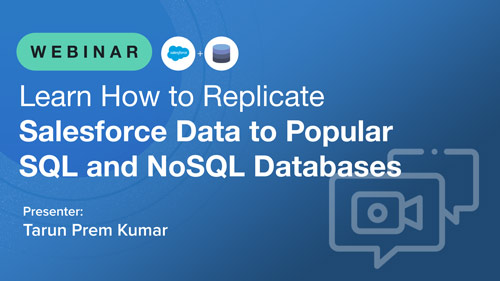
Watch this on-demand webinar to see how to replicate Salesforce data to a SQL and NoSQL database with the DBSync platform

Salesforce Replication On-Demand Demos

See DBSync in Action

Want to sync Salesforce data effortlessly to on-prem or cloud databases anytime, anywhere? We help you replicate data with no-code automation, adapt to dynamic schemas, and empower analytics and decision-making with up-to-date insights.

data transfer
Effortless Integration

Connect Salesforce to any database for seamless data movement.
Automated Workflows

Automate ELT pipelines with a simple, no-code replication process.

Reliable Data Replication

Replicate Salesforce data with schema-aware accuracy in real-time.

Continuous Sync

Keep Salesforce data synchronized across all target systems.

Replicate your databases with DBSync now

Try DBSync's online Playground or Book a Personalized Demo to see how DBSync can optimize your data movement 

FAQs

Quick answers to questions you may have. Can't find what you're looking for? Check out our full documentation.

Salesforce data replication is the automated copying and ongoing synchronization of Salesforce data into an external database or warehouse for analytics, reporting, backup, or integration. DBSync does this with no code, keeping the target in sync with Salesforce via change data capture.

DBSync replicates Salesforce to SQL Server, MySQL, PostgreSQL, Oracle, IBM DB2, MongoDB, Snowflake, Databricks, Amazon Redshift, Amazon S3, Azure Synapse, and MinIO, any supported SQL or NoSQL target, on-prem or cloud.

It can be. DBSync uses change data capture to sync Salesforce inserts, updates, and deletes in near real time, as often as every five minutes, or on a fixed schedule if batch loads suit your workload better.

Yes. DBSync is schema-aware and replicates both standard and custom Salesforce objects, automatically creating and adapting the target schema as fields and objects change, while preserving parent-child relationships.

Five no-code steps: connect Salesforce, connect your target database, select and map the objects to replicate, run and schedule the replication jobs, and enable notifications. DBSync handles the initial load and incremental syncs from there.